
We help you to assume the correct posture
“Posture is the mirror of the soul.”
dr Bob Hoffman
Posture is a “neurological reflex,” this means that we can hold a posture voluntarily only until our brain makes us return to the posture where it feels most comfortable (most comfortable/protected).
The postural posture with shoulders hunched forward and the neck recessed in a “turtle” shape is typical of the individual who is afraid and does not want to expose himself, while the posture with broad shoulders and chest out is the typical command posture.
Scientific studies by Dr. Amy Cuddy (Posture Matter) show that it only takes three minutes of correct command posture to activate the production of command hormones in our body and consequently of feel-good hormones.
The same happens vice versa: it only takes three minutes of fearful posture to activate the production of catecholamine hormones including cortisol, which leads to overstress.
Scientific research appearing in the Journal of American Geriatrics shows that holding the neck and head forward increases the risk of degenerative neurological diseases of the brain more than smoking a pack of cigarettes a day.
Our holistic approach improves posture instantly, and we also teach exercises to maintain the positive effects for longer.
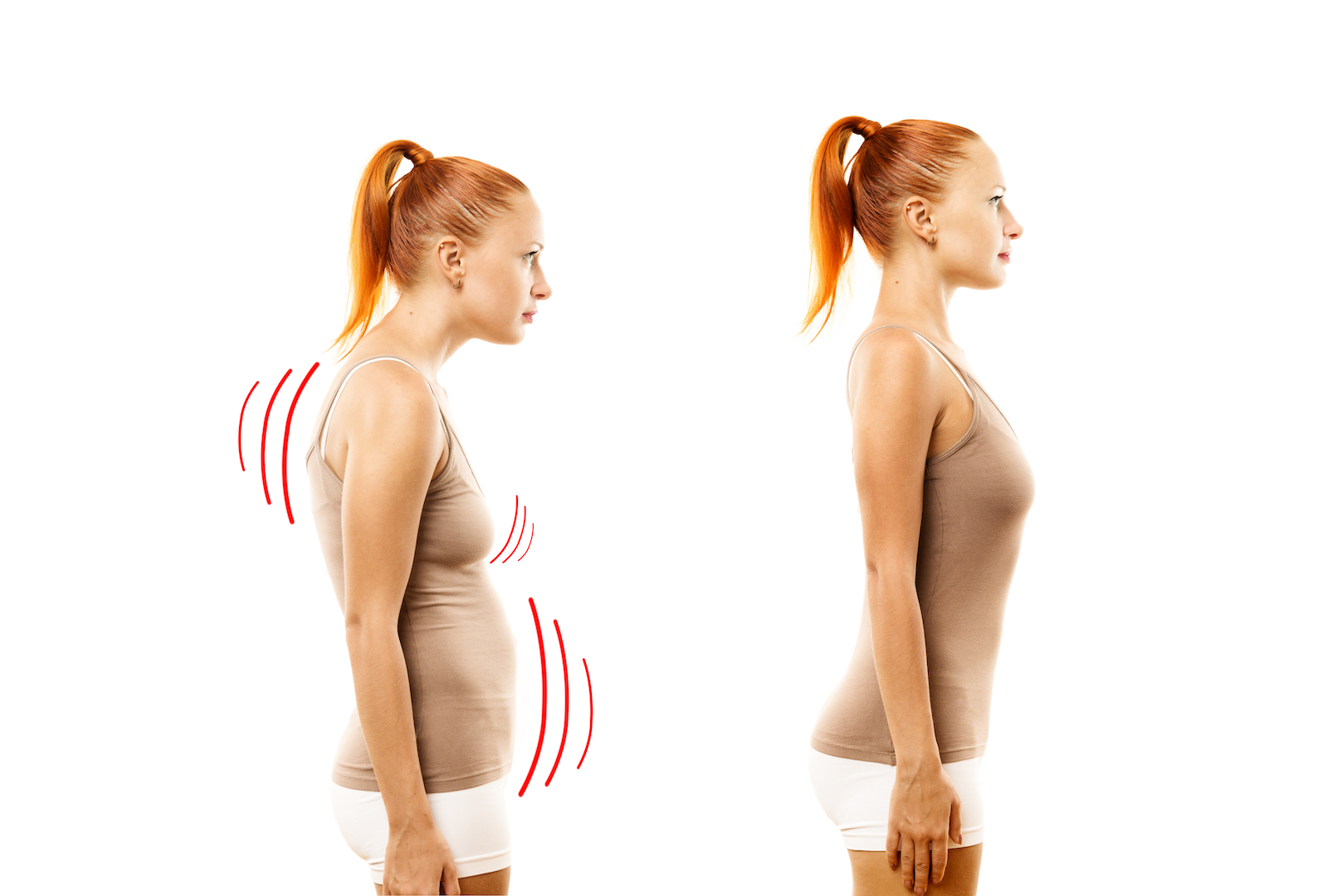
We correct your posture
The word posture refers to the posture that an individual holds during all moments of his or her life, i.e., how he or she sits, how he or she stands, how he or she walks, or how he or she lies down while sleeping.
The importance of correct posture
Posture is determined by body structure, but it can also be influenced by genetic or emotional factors.
Correct posture of the spine helps reduce potential tension.
Unfortunately, our lifestyle, added to the force of gravity, often does not allow for healthy upright posture.
The habit of hunching over begins in childhood when we sit in front of the television and school desk, continues into adulthood when we sit in front of the computer or desk.
As we age, osteoporosis (bone demineralization) and osteoarthritis (wear and tear) often lead to poor posture.
Sitting and inactivity automatically worsen posture and, inevitably, can contribute to a wide range of problems.
Which is the correct posture?
Normal posture is defined as an upright position with the arms let down along the body. A good method to achieve this posture is to:
- lean your lower back against a wall or chair so that it is flat;
- straighten the shoulders while keeping them low;
- tuck the chin in while gently bringing the head back;
- breathe with the diaphragm (see Zilgrei Method).
Repeating this exercise every 20 minutes helps improve posture.
Proper posture at a desk
When working at a desk or computer, it is important to adjust the environment to encourage healthy posture. Tilt the chair so that the back of the seat is higher than the front. If the chair does not recline, use a cushion of contoured foam.
A desk that is too low promotes a hunched posture.
Reading and writing can cause shoulder and neck strain. A lectern or stand for writing can prevent this tension.
The keyboard and monitor should be positioned directly in front so that you do not have to turn your head nor the lower back.
The monitor should be at eye level. When using the keyboard, the elbows should rest on the desk, fingers should be resting on the keys, and the shoulders should be relaxed.
Always take a break after 30-40 minutes of heavy work, get up and walk around, in any case one should look away from the monitor and stare at a distant object
so as to vary the focus of the eyes.
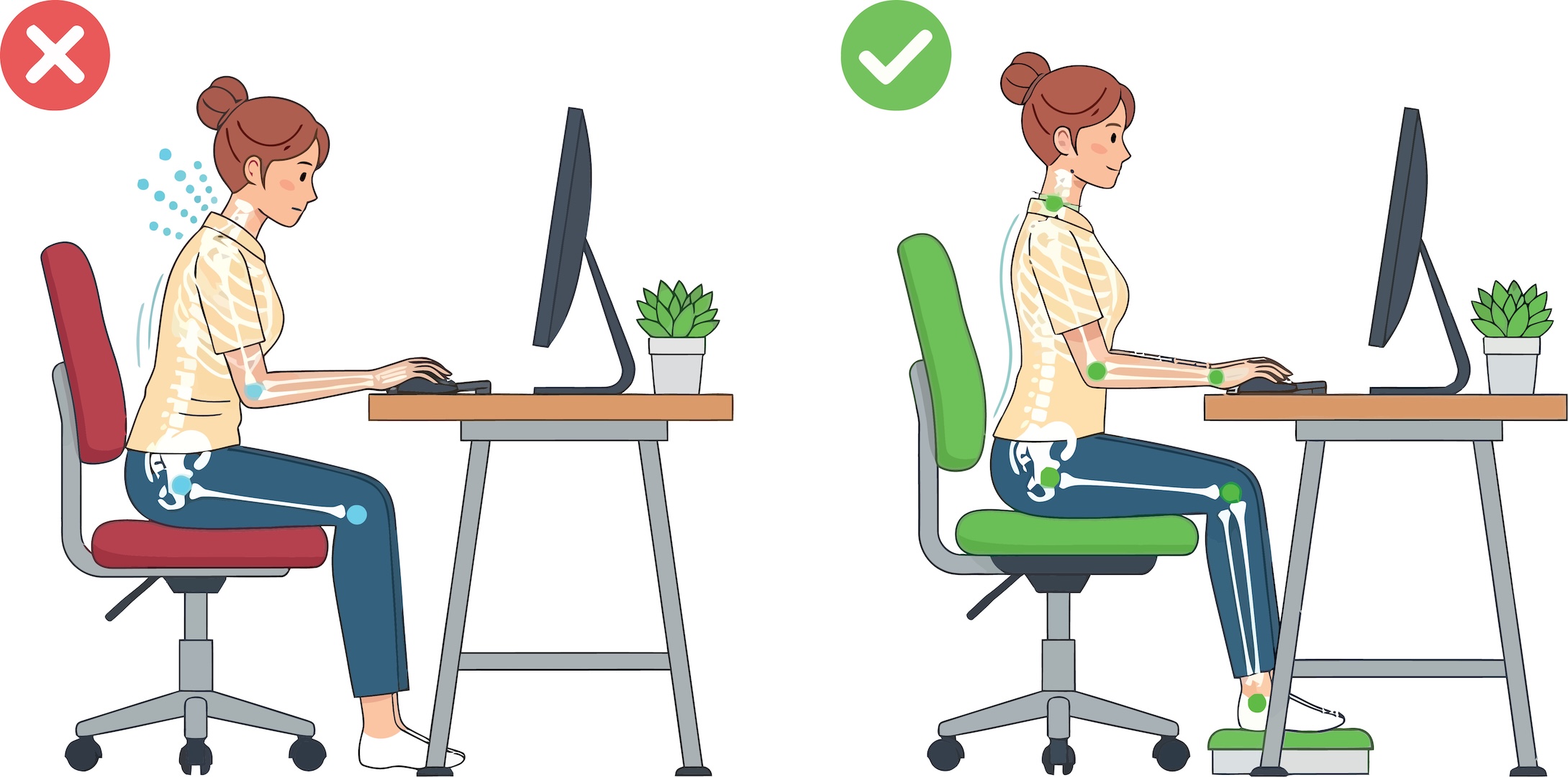
Yes and no to the computer
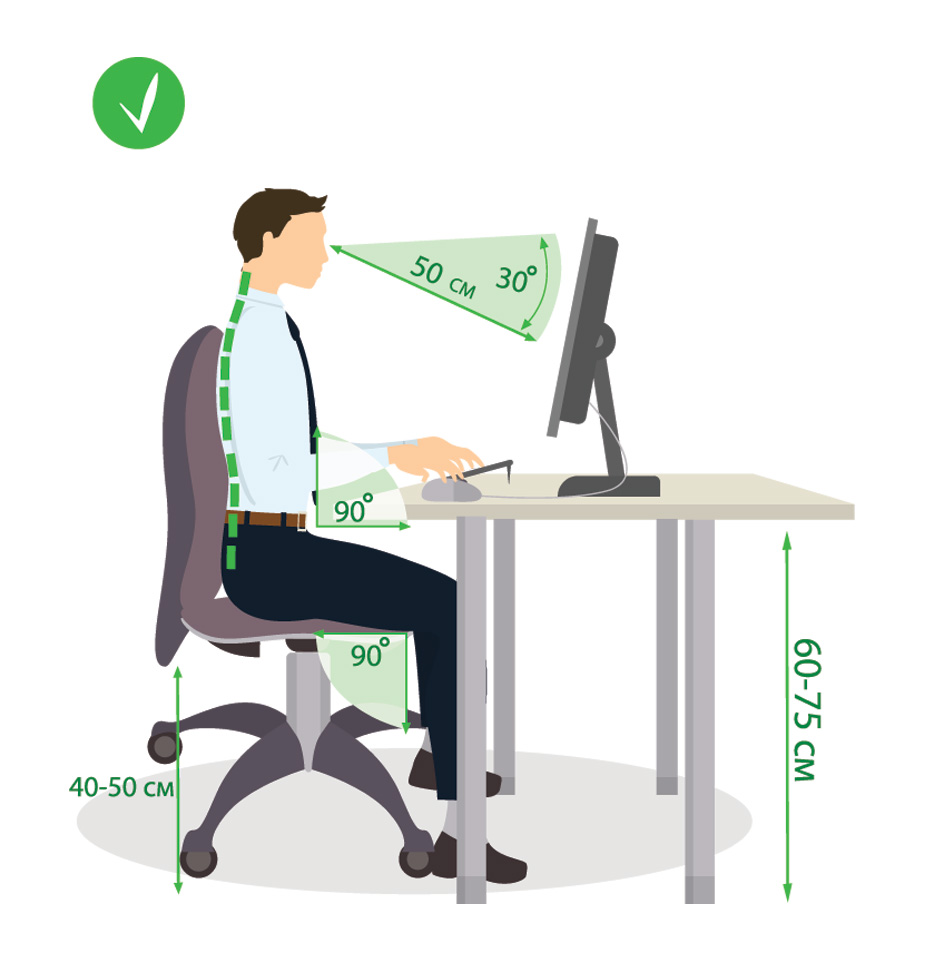
Proper posture
- possibly use a good chair with armrests
- use proper backrests
- use a desk of the right height
- take regular breaks to rest your eyes, neck and shoulders
- get up and walk around at least every hour
- while sitting relax your shoulders and neck
- while using the keyboard relax your wrists
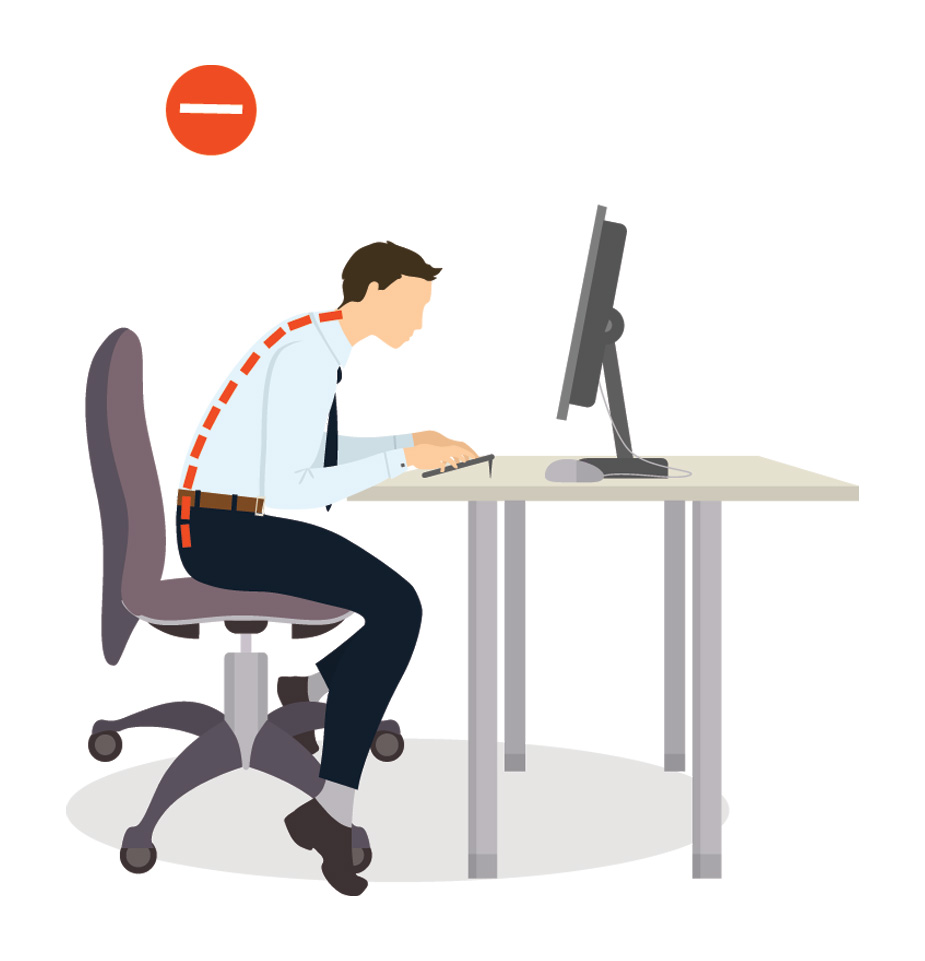
Incorrect posture
- sagging
- using an unsuitable chair
- using a low desk or table
- sitting too long
- stiffening the neck, shoulders, or wrists
- cross your legs
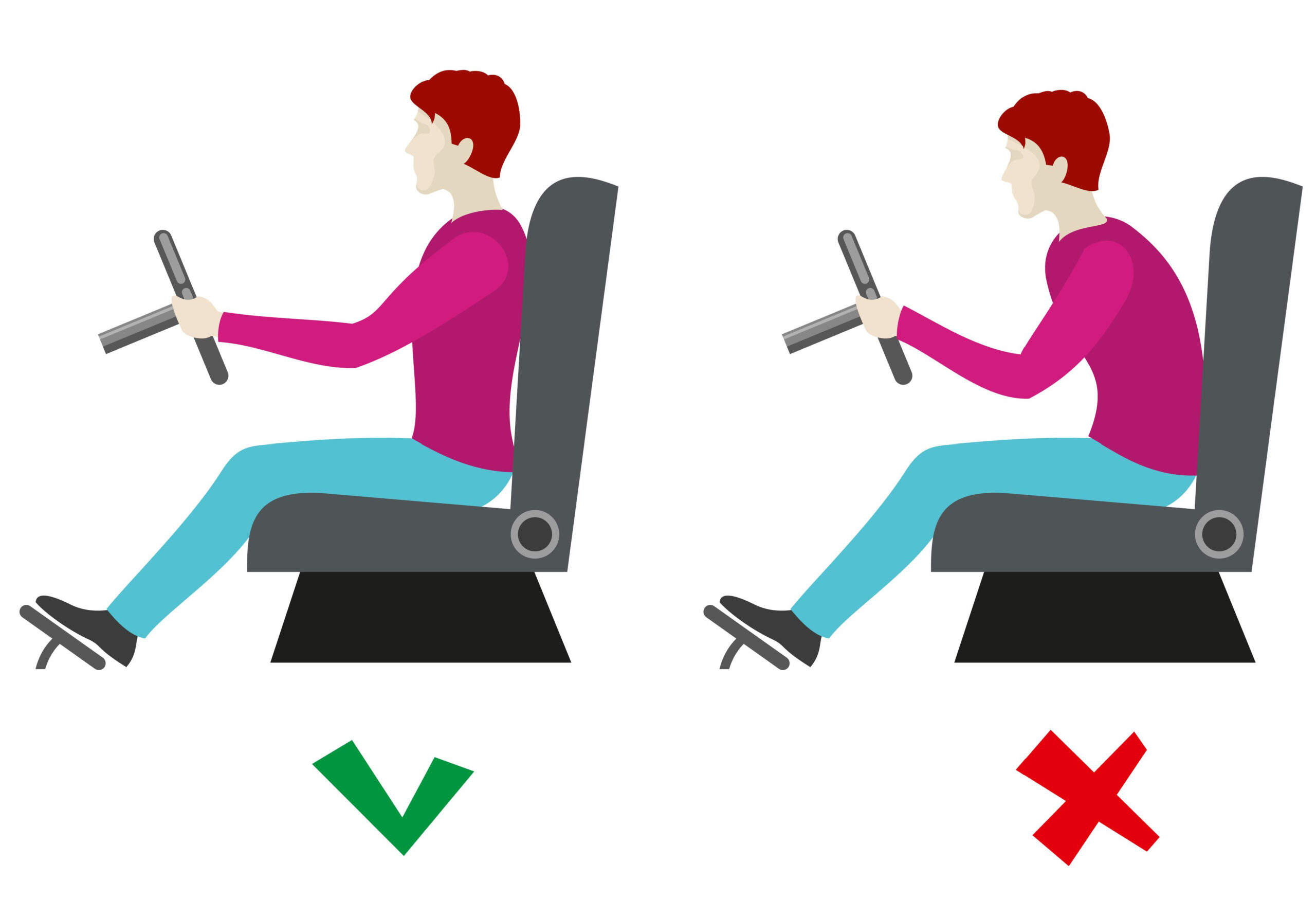
The correct posture when driving: sitting posture
Driving or sitting in a car is very common nowadays. The best way to sitting in a car is to rest the lower back well ,with the backrest slightly reclined.
Adjust the seat height so that your hips are at the same level or slightly above the knees. The distance of the seat should allow you to reach the steering wheel without bending your shoulders forward.
The same basic rules apply to proper posture in a chair. The feet must be resting comfortably on the floor, do not cross the legs so as not to create additional strain on the lower back and leg joints, and use, if possible armrests.
Remember to remove your wallet from your pants pocket.
Weight and Posture
Overweight people often have a hunched posture.
Excess weight creates more strain on the lower back on both joints and muscles.
A good diet and regular exercise often quickly improve pain and posture.
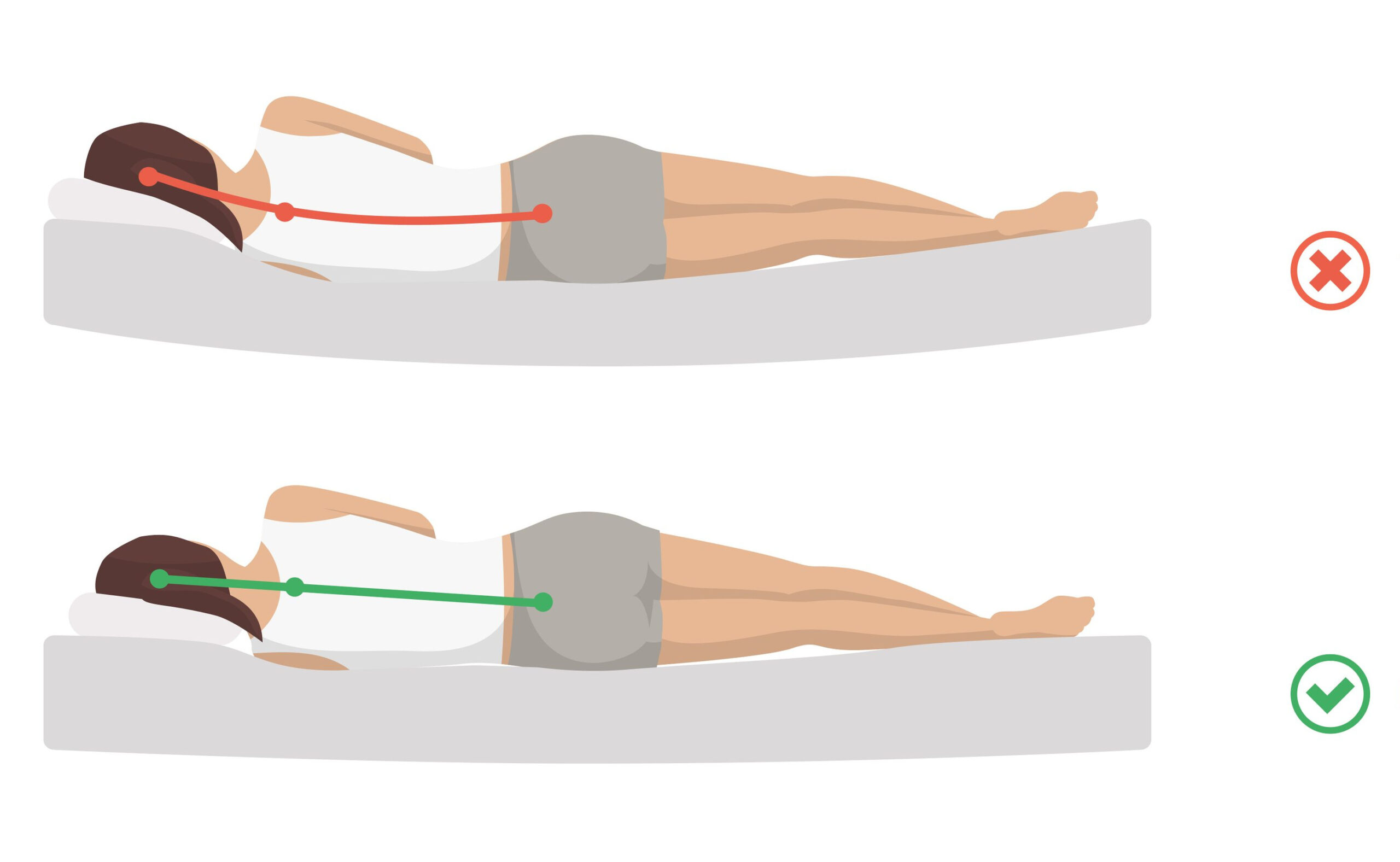
The correct posture for sleeping
The ideal sleeping posture is one in which all the natural curves of the spine are kept in minimum tension.
The foetal position (lying on one side with legs folded) is excellent.
To avoid turning over on your stomach place a pillow between your knees or thighs.
If you prefer to sleep on your back place a pillow under your knees to avoid overloading the lower back.
Avoid sleeping on your stomach.
Benefits of good posture
When sitting or standing, it is important that the shoulders are relaxed, back and down.
This prevents hunching over and pushing the head forward.
Sagging can sometimes lead to a permanent arching of the upper back, with the head protruding forward.
This can induce tension and fatigue on the muscles in the back of the neck and shoulder blades.
So many headaches, so much pain in the neck, shoulders, arms and shoulder blades are due to this position.
Sitting in a correct posture ensures good weight distribution between the vertebrae, improves diaphragmatic breathing and aids digestion.

Maintaining correct posture
Milano Chiropratica Studio Mazzini chiropractics in Milan can help you regain and maintain healthy posture.
A very simple postural gymnastics exercise, repeated several times a day for 20-30 seconds each time, will help you avoid some of the pains associated with incorrect posture: lower and bring your shoulders back gently, bringing your shoulder blades closer together, turn your hands outward and tuck your chin in.
This exercise will help you maintain healthy posture.
The duration of chiropractic treatments is entirely up to you, but to get the best long-term benefits, always follow your chiropractor’s recommendations.

Book your visit
To book an appointment at our Milan office:
Tel: +39 02 89.40.49.90
WhatsApp: +39 393 81.04.359
Email: segreteria@studiomazzinisrl.it
Online consultation
If you live outside Milan, you can book your consultation online.
Testimonials
[trustindex data-widget-id=28c06f4113c708567476798acec]