
Tension of the dura mater can cause disturbances throughout the body
Are you suffering from these complaints?
- You feel stiff all the time and ache all over
- When you wake up in the morning you are more tired than when you went to bed
- You can’t do sports because then you feel all broken down
- You have restless nights and grind your teeth
- You wake up around 4 a.m. and don’t catch any more sleep
- You can’t concentrate and often find you lose your memory
- You have hunger attacks and seek out foods high in sugar
- You get angry easily even over small things
If you answered yes to one or more of the questions, it is easy to find the cause is “Tough Mother Tension” – I encourage you to read this article carefully to understand how to solve the problem.
This syndrome is very common.
We have noticed that most people who suffer from it have experienced a trauma that they often do not even remember, but their brain remembers it very well and relives it constantly, making them always be on “alert” as if they always face danger.
They often complain of chronic musculoskeletal pain or a generalized malaise that comes and goes and may affect various parts of the body.
They have usually already undergone several examinations and present with a plethora of clinical examinations.

Tension of the dura mater
People report a number of symptoms that haunt them on a daily basis.
They usually say that they feel tired all the time, have a general malaise, have difficulty sleeping, something is always wrong with them, but that they have not found anything particular in the clinical examinations.
Sometimes they are so resigned that they even think of making up the pains and become depressed about their situation, finding no way out.
Symptoms may increase when they wake up or when they assume particular positions (e.g., sitting or standing for a long time).
Often these symptoms are due to “dura mater tension.”
What is the dura mater?
The dura mater is a membrane that is part of the meninges; it wraps around the brain and is joined to all cranial sutures, descends through the foramen magnum and wraps around the spinal cord inside the spinal canal.
It attaches to the inside of the first three cervical vertebrae, after which it descends freely through the other vertebrae and then again laces up at the sacro-coccygeal joint.
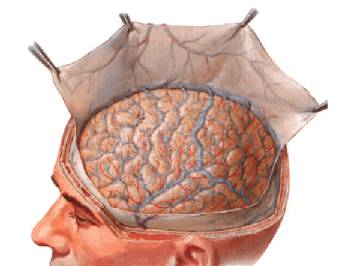
Dura Mater
A section of the skull in which we see the diploe cranial bone to which a double layer of dense connective tissue (the dura mater, colored gray) is attached.
What happens when the dura mater is under tension?
Normally the dura mater is not under tension and allows free movement of the spinal cord within the spine.
However, when the dura mater goes into tension it can create irritation to the cranial sutures, vertebrae and nerves causing pain in different parts of the body.
Another important effect of dural tension is interference with the normal or natural movement of cerebrospinal fluid that is stimulated by respiration like a pump; often dural tension blocks this mechanism creating general weakness of all muscles.

Layers of brain lining
Discomforts caused by dura mater tension
Knowing that we breathe on average 12 times a minute for 24 hours a day, people with dural tension weaken “12 times a minute for 24 hours a day”: it is therefore easy to understand how patients feel tired all the time, suffer from general malaise and have a very low threshold of resistance to everything.
The dura mater therefore plays a key role in mental and physical health and well-being.
Dural tension and disorders spread throughout the body
When the dura mater functions normally and does not interfere with the mechanism of cerebrospinal fluid circulation, the spine is more flexible and allows proper mobility.
When the dura mater goes under tension, the movement of the spinal cord is restricted and consequently creates traction on the nerves coming out of the dura mater.
If this dural tension also interferes with the mechanism of cerebrospinal fluid movement, it can cause so many symptoms and disorders throughout the body, seemingly unrelated to each other but actually are.
This is why dural tension can be responsible for multiple symptoms and appear to be assimilated to pathologies that are not instrumentally diagnosed.
What can cause dura mater tension?
The most common factors that can cause dura mater tension are:
- trauma
- physical trauma such as falls (on the buttocks), automobile accidents, and whiplash
- biochemical trauma such as food poisoning, poisons, improper reactions to drugs, medications or vaccinations
- psychological trauma; any trauma that is not integrated into the nervous system can create reactions of neuroception and dura mater tension, as well explained by Dr. Stephen Porges in his book “The Polyvagal Safety”
- general anesthesia
- incorrect postures
- orthodontics (especially when worsening after the application of a byte/plate)
- adhesions caused by spine surgery.
Chiropractic experience teaches that symptoms caused by dural tension, especially in cases of sacral trauma, can often occur even after many years.
From my personal experience, working as a volunteer chiropractor in Vernazza after the flood, I noticed that all the people treated in those days, who had undergone the emotional trauma of experiencing “the flood,” showed signs of dura mater tension, and in the everyday clinic I see that all people who have experienced trauma of any kind that is recorded in their memory can suffer from it.
In the present day, I have also noticed and corrected “dura mater tension” in those who have had major symptoms from Covid-19 or who have had adverse reactions to the Covid-19 vaccine.
What are the symptoms of dura mater strain?
The most common symptoms of dura mater tension include:
- headaches (frontal, neck, which may increase by bending the head forward or simply by coughing or sneezing)
- neck pain
- Arm pains that increase by bending the head forward
- shoulder pains
- back pain
- sacral pain
- sciatica-like pains
- bilateral leg pain and fatigue
- menstrual pain
- spinal stiffness upon awakening
- chronic problems that have neither a diagnosis nor a known pathology (general malaise, chronic fatigue, never feeling well)
- “fibromyalgia” pains
- dura mater pain

The relationship between dura mater tension and herniated discs
Pain in an arm or leg, similar to sciatica or brachialgia, can be caused by dural tension due to the traction of spinal nerves coming out of the dura mater mimicking the symptoms of a herniated disc, which is not found on an MRI or CT scan investigation.
If prolonged over time, dural tension can result in abnormal rapprochement of the vertebrae resulting in crushing of the discs, also predisposing to the formation of a protrusion or herniated disc (especially at the cervical level).

How does a chiropractor address and correct dural tension?
Addressing dural tension and correcting it is a much more common procedure than you might think.
When we adjust dural tension, we notice that the body immediately regains the faculty to function properly and many ailments automatically disappear, but it is often necessary to repeat this correction several times over time until the limbic system stops reacting immoderately to the memory of the trauma.
Each person is different and responds to treatments depending on the severity and chronicity of the case.
From my experience, three to six months of continuous treatments, more or less intensive, are needed to correct dura mater tension.
Although the problems caused by dural tension have already been described in the 1920s by Speransky, a student of Pavlov, and described in his book “A Basis for the Theory of Medicine,” no diagnostic-instrumental test has yet been found that can identify it.
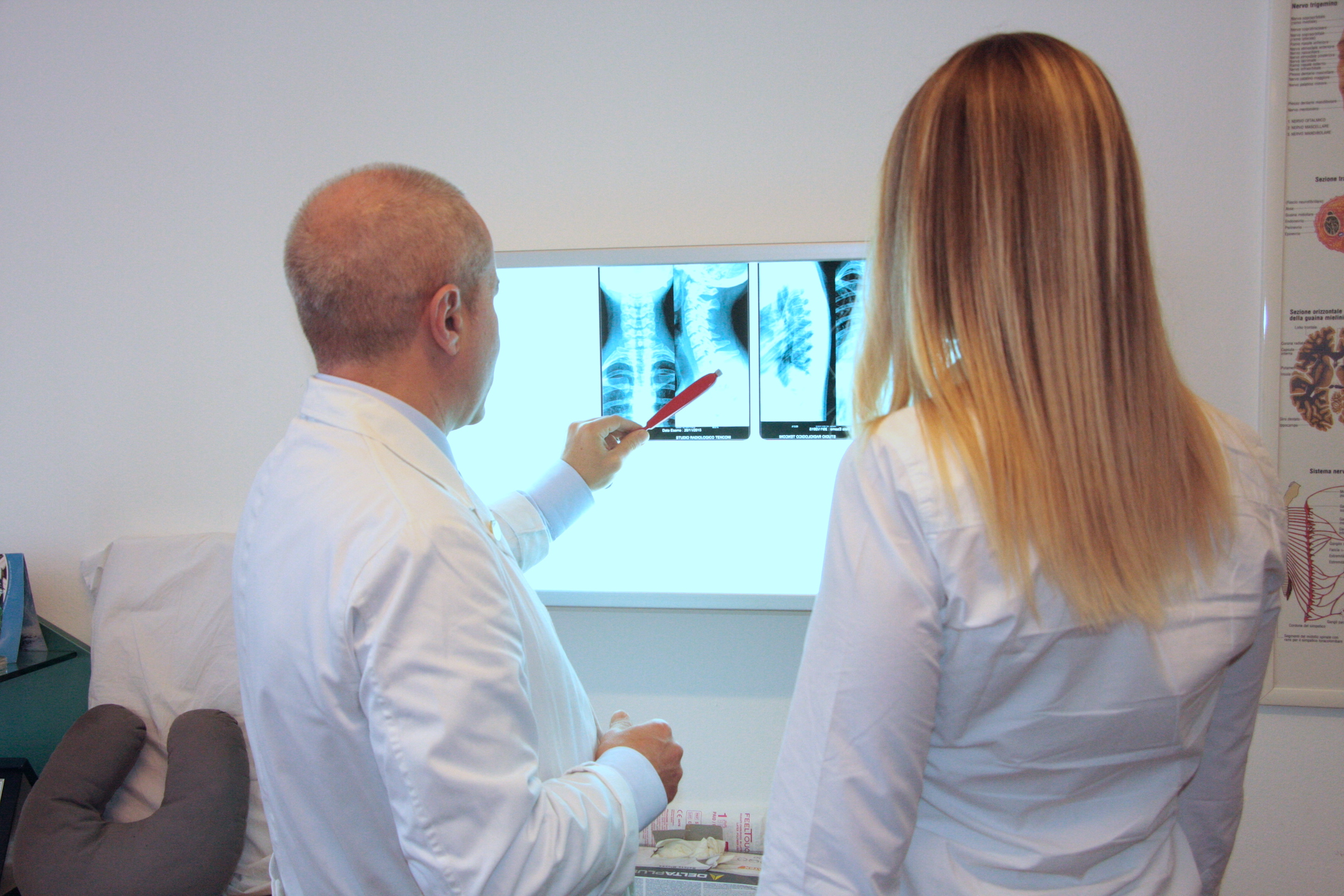
Some signs can be found by looking at X-rays of the spine where signs of early arthrosis caused by postural overloads due to loss or accentuation of the natural curves of the cervical, dorsal and lumbar spine will be evident.
Using Applied Kinesiology, through muscle testing, and functional neurological testing we are able to identify and correct it with specific chiropractic treatments.
The treatment of dura mater tension
Through very specific manipulations of the cranial sutures, the first cervical vertebrae, and the sacro-coccygeal joint, which are the points where the dura mater is buckled, we are able to eliminate dural tension.
After initial therapy to eliminate dural tension, chiropractors provide suggestions and teach specific exercises to prevent the problem from recurring and recommend periodic checkups to maintain optimal health.
If you think you are suffering from dura mater tension or if any of your loved ones are suffering from it book a visit to the chiropractor right away, you will be surprised at how your body will respond and in no time you will feel like a regenerated, healthy person.
“I dedicate this article to the late Dr. Piet Seru the teacher who first discovered, studied and taught chiropractors how to find and correct dura mater tension allowing us to help thousands of people over the years. Thank you dear Piet you are always with us.”
Book your consultation
Book your consultation at Milano Chiropratica – Studio Mazzini.
We will help you restore energy, clarity and balance through our integrated, drug-free approach.
Book your visit
To book an appointment at our Milan office:
Tel: +39 02 89.40.49.90
WhatsApp: +39 393 81.04.359
Email: segreteria@studiomazzinisrl.it
Online consultation
If you live outside Milan, you can book your consultation online.